
Of mice and men and female rats.
Nothing to see here...or is there?

Dear GFPs,
Since I last wrote to you something terribly sad has happened: Debbie Cameron, the sociolinguist and author of several highly influential feminist books on language, has died of pancreatic cancer. She was only sixty-seven.
For anyone who has heard me speak about my personal journey to feminism, you will know how important Debbie’s writing was for me. I can still remember now, all those years ago, sitting in the Upper Reading Room and opening up my university library’s copy of Feminism and Linguistic Theory.
I didn’t pick the book up with particular interest or enthusiasm; I picked it up because it was on the reading list for one of the essays I had to write that week. And I didn’t read it with much interest or enthusiasm either: when I opened Debbie’s book I would not have described myself as a feminist (and indeed, looking back at the notes I took at the time, I see several sceptical interjections of my own in among all the quotations of hers I dutifully noted down).
I’m not sure if I would have defined myself as a feminist by the time I closed the book, but what I can say for sure is that it was this book that turned me into one. Not only that, but it is this book that started the process that would end with my writing Invisible Women, because it was Debbie’s book that first introduced me to the concept of the generic masculine (she wrote about its role in language; how we use the male pronoun and the male grammatical gender as a generic pronoun and grammatical gender). And without the lightbulb moment that her book generated in me I strongly suspect that I would never have noticed all the other ways that we use men as stand-ins for a gender-neutral universal human — after all, until I read her book I had never even noticed that every time I heard or read words like “man” or “he” used supposedly gender neutrally I was in fact picturing a man.
I made a point after that of going to her lectures on linguistics at the English department, and you can imagine how thrilled I was when, several years later, Debbie agreed to chair a discussion about my first book at Blackwells bookshop in Oxford. I had not yet written Invisible Women, but I already knew how important she had been to my life and to have her recognise my work in this small way meant so much to me.
I had heard that Debbie was sick at the end of last year. We weren’t close enough that I felt it was my place to contact her; we weren’t in regular touch. But I hoped that I might have the chance to see her again when I had emerged from my current self-imposed hibernation as I finish my latest book. I assumed that there was time — and I am devastated that there wasn’t. I hope she knew how much she meant to so many of us. I wish I had been able to tell her how very much she has and always will mean to me personally, as a writer, as a feminist, and as a woman. She will be much missed.
Not all heroes wear capes, but some do wear judge’s robes
Sticking for the moment with feminist heroes, I have a new one to add to the list, in the shape of this judge at a civil court in Barcelona (with thanks to GFP Lorena, who first brought this story to my attention). For those of you who don’t read Spanish, let me explain what happened.
So, first of all, a woman got into a car crash. It happens. And this woman says she suffered injuries in this crash which, as we know, also happens — indeed, as I may have mentioned once or twice in this newsletter, it happens at a higher rate than it does in men. But her insurer rejected her claim, saying that her injuries could not have resulted from the crash — and they had the biomechanical evidence to prove it (regular readers of this newsletter might be able to guess where this is going). So the case ended up in front of Judge Isabel Giménez. The car crash victim presented her medical reports; and the insurer presented their evidence.
And the judge said, BUT YOUR EVIDENCE IS ALL IN MEN! 😍😍😍
Judge Giménez, who clearly knows her stuff, pointed out that while default male car crash testing assumes that “the male anatomy represents the ‘average human’,” women are in fact not “simply a reduced version of men.” In fact, she continued, compared to men, women are at a significantly increased risk of injury and death if they are involved in a car crash and there are a whole range of sex differences that may be behind this increased risk, but which are simply not capture by current “androcentric” testing and in conclusion the insurer’s so-called evidence counted for nothing and they must now PAY UP.
Extremely enjoyable all round — not least because the one thing that reliably does affect company decision-making in this world is money. And so while preventing the injury and death of millions of women every year may not be enough to force car manufacturers to account for the female body in car safety testing, trying to avoid millions in compensation pay-outs just might.
Of mice and men
Less enjoyable is another trend I’ve noticed on social media recently where a dedicated band of exercise influencers have been busy painting anyone who asks for female-specific exercise data as a grifter. Now, granted, there are a lot of grifters out there, and inevitably, some of them have been attracted to the data vacuum that is women’s sport science — indeed, the lack of data almost guarantees that the grifters will show up because grifters, like nature, abhor a vacuum. And it is also true that some of these grifters have been pretending that they have the answer to all your female-specific exercise questions when what they actually have is a bunch of studies in female…mice.
These people have been rightly called out — and I have no problem with that; profiting off the female data gap in sport science by pretending that your female mouse study is directly applicable to female humans is not feminism. What I do have a problem with is the far-too-often corollary to these call-outs which is that you should instead listen to this far more sensible influencer who can give you data collected in human men which is better than data collected in female mice because female humans are more similar to male humans than they are to female mice. And, like…I’m sure that’s true but, here’s a wild idea just off the top of my head: how about some data in female humans. Why is the choice between male humans and female mice? WE’RE RIGHT HERE??? Hello?!
Some of these supposedly sensible influencers diversify on this point and instead of telling us to simply be satisfied with male data because it’s better than mouse data, will claim that actually there isn’t a serious female data gap in sports science at all and…I don’t actually know what to say to these influencers because sport science has long been proven to be one of the absolute worst areas when it comes to collecting data in actual human females. I wrote about this gap in Invisible Women and now, seven years later, a new study has shown that…very little has changed.
This analysis of over 600 recent research articles published in six leading exercise physiology journals found that nearly half of them included only male participants, with only eight per cent of studies focusing exclusively on women. And yes, there are legitimate reasons to study only one sex, if, for example you are studying a sex specific condition like menstruation or pregnancy, but while this was the reason for 35% of female-only studies (with the majority of female-only studies aimed at filling in a female data gap on an area of research that had previously only been done in men), only 0.7% of male-only studies were on a male-specific condition, with more than 90% of studies that were relevant to both sexes being conducted exclusively in men.

Even worse, these all-male studies being done on topics relevant to everyone were overwhelmingly likely to get all default male on us and “overgeneralise” their results as relevant to gender neutral “humans,” “adults,” “patients” or “athletes”. Meanwhile only 12% of them even acknowledged that their study was done in exclusively male population (compared to 79% of all female studies) and only 5% of them provided any justification for studying only men (I mean, fair, if I had no justification I too would probably pretend there was nothing to see here). On the few occasions they did both acknowledge AND attempt to justify their exclusion of the 50% of humanity that is not male, the number one reason given was, of course, our old friend the “women are WAY too hormonal” gambit, with the second most common being that it’s easier to study just one sex, which, ok, fine, but then why does the single sex we choose to study always just happen to be male? I smell a RAT. And not even a female rat.
As for studies that did include both male and female participants, women were still extremely underrepresented, with very few mixed-sex studies bothering to do any sex analysis or even sex disaggregate their data. The only time study populations approached 50% female was when the study authors were mainly women — and that was only the case for 10% of studies compared to the 68% of studies which had mainly male authors.
I don’t know about you, but I kind of feel like maybe there is something to see here?
A brief feminist writing retreat coda
A quick note to let you know that best-selling writer Rachel Hewitt, the author of, among other books In Her Nature, is running one of her excellent writing retreats this April in Harrogate and this one is themed around “Feminist Writing.”
Booking closes on the 9th March, but Rachel tells me that you can secure an early bird price if you book by 19th Feb — which you can do by clicking here!
Poppy pic of the week
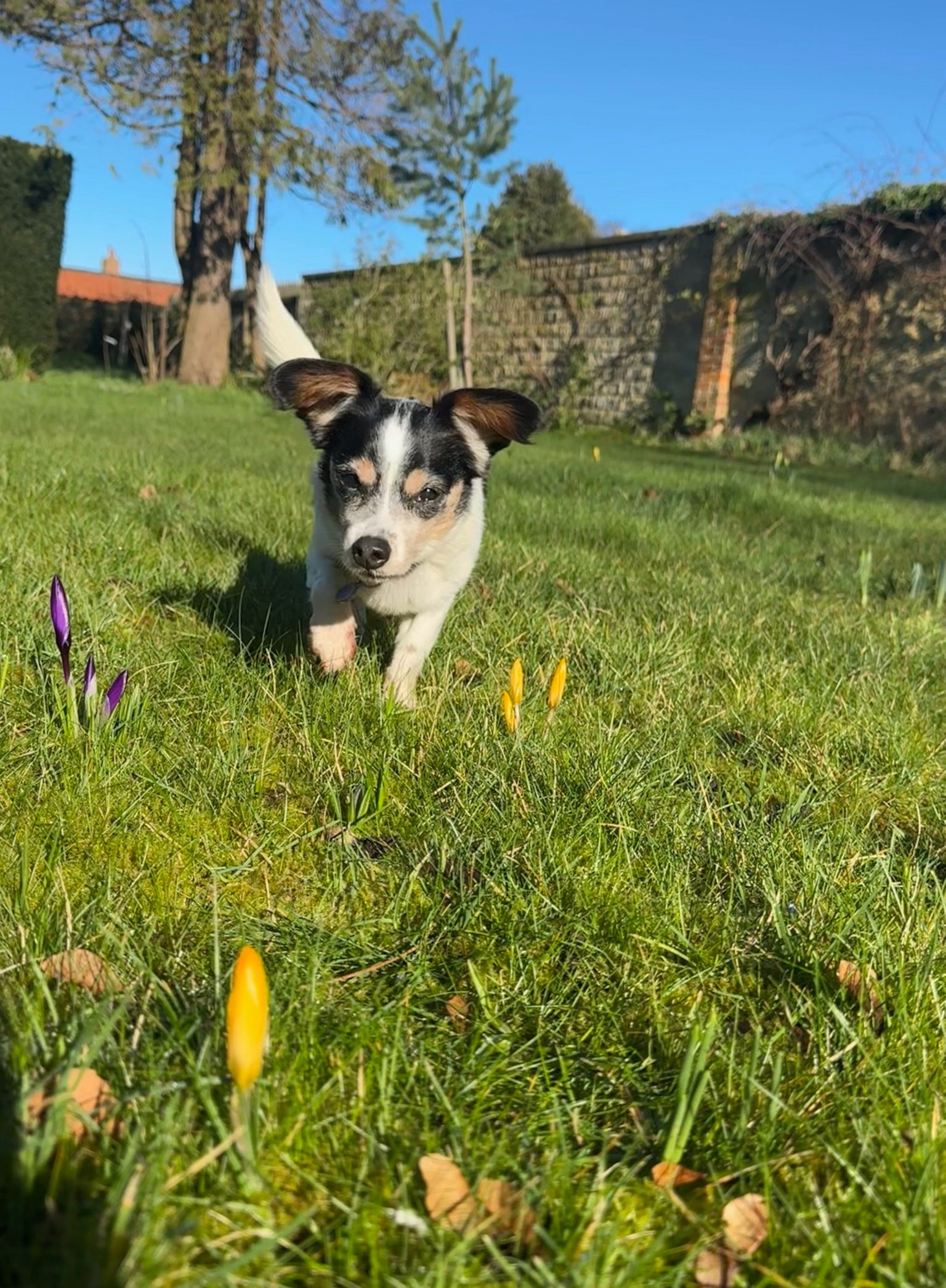
Spring is coming!!!!
And that’s it! Until next time, my dear GFPs xoxoxo
Thank you for sharing about the Spanish judge. What an absolute GFP!
The « women are sooo hormonal » always make me want to scream.
Women’s hormones would disrupt the test = we think the results on women would be different = we should only test on men and apply the results to women.
HOW is this a sound scientific reasoning ? If you think the results will be different, of course you should study women ! If you think the results will be the same, hormones are not a problem and thus you have no reason to exclude women !